
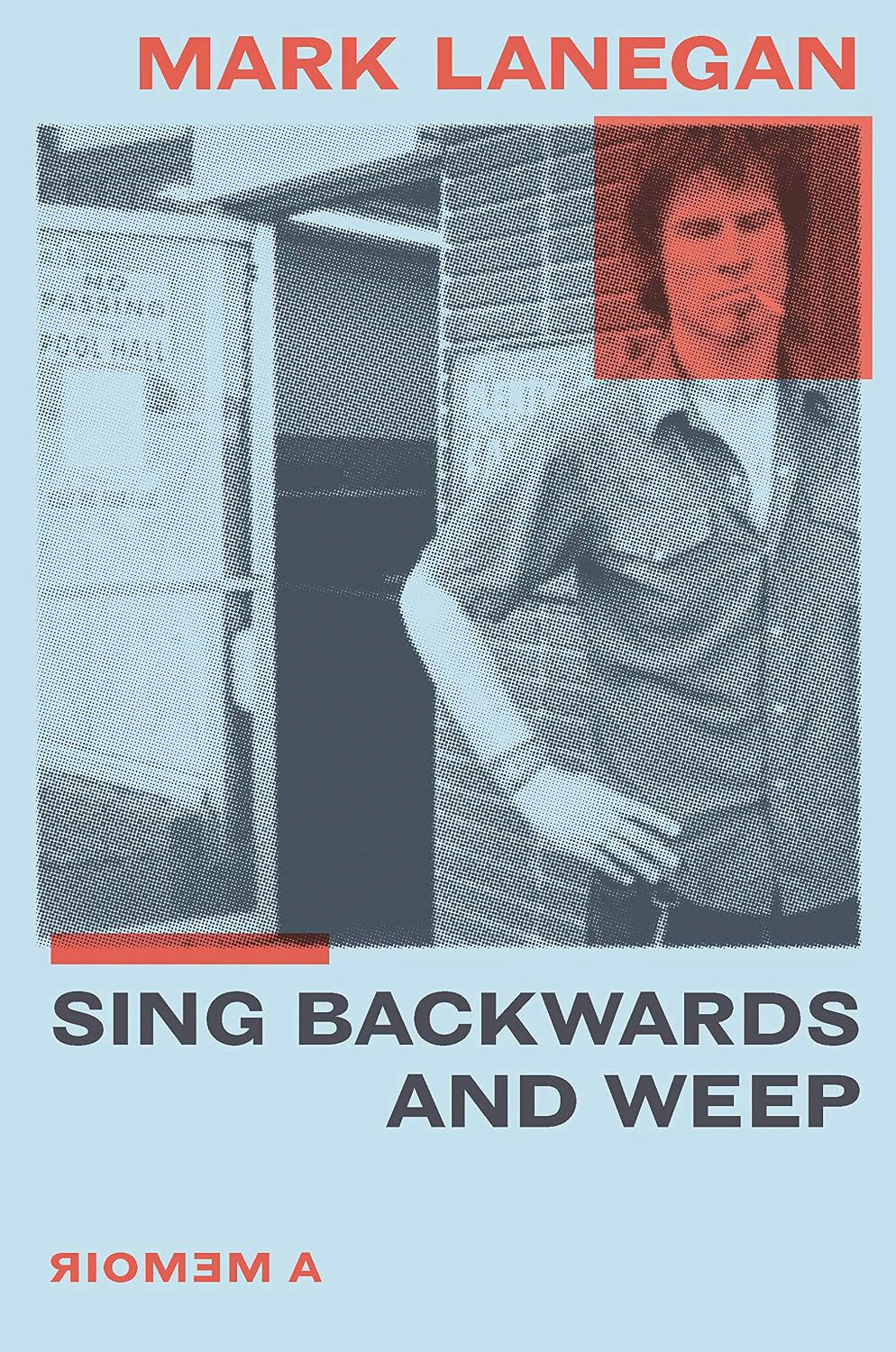
Book Review:
Sing Backwards and Weep
by
Mark Lanegan
Rock memoirs often fall into familiar rhythms: tales of excess, redemption, and the mythology of life on the road. Mark Lanegan's Sing Backwards and Weep rejects nearly every convention of the genre. It is neither a celebration of a storied career nor an attempt to settle old scores. Instead, it is a stark, unsparing account of addiction, self destruction, survival, and the immense personal cost of living on the edge of the alternative rock explosion of the late 1980s and '90s.
Best known as the unmistakable voice of Screaming Trees and later for his acclaimed solo work and collaborations with artists ranging from Queens of the Stone Age to Isobel Campbell, Lanegan writes with the same gravel worn honesty that defined his music. His prose is lean, direct, and often shockingly candid. There is little interest in polishing his past or casting himself as a misunderstood antihero. The result is a memoir that feels less like a performance than a confession.
The book traces Lanegan's life from his troubled youth through the rise of Screaming Trees during the grunge era, chronicling years consumed by heroin addiction, alcoholism, fractured friendships, and brushes with death. Along the way, familiar figures from the Seattle music scene including Kurt Cobain, Layne Staley, Chris Cornell, and Anthony Bourdain later in Lanegan's life appear not as larger-than-life legends but as complex individuals navigating their own struggles. These encounters enrich the memoir without ever distracting from its central focus: Lanegan's relentless battle with himself.
What distinguishes Sing Backwards and Weep from many memoirs of addiction is its refusal to romanticize suffering. Lanegan neither glamorizes drug use nor presents recovery as a simple narrative of triumph. He writes with brutal clarity about the lies, loneliness, and collateral damage that addiction creates, leaving readers with an understanding of its reality rather than its mythology. His moments of reflection carry weight precisely because they are earned, never sentimental.
For readers immersed in punk, alternative rock, and the broader underground, the memoir offers something more than a behind the scenes history of a defining musical era. It captures the contradictions of a scene that prized authenticity while often consuming the very people who embodied it. Lanegan's story becomes a meditation on survival, creativity, and the uneasy relationship between art and personal destruction. His resilience lies not in presenting himself as a hero but in his willingness to confront the darkest chapters of his life with unwavering honesty.
Lanegan's writing also reveals a dry, often unexpected sense of humor. Amid stories of chaos and despair are moments of absurdity and understated wit that prevent the memoir from becoming emotionally one dimensional. These glimpses of humanity make the darker passages all the more affecting, reminding readers that even the bleakest lives contain moments of connection, laughter, and grace.
Sing Backwards and Weep stands among the finest music memoirs of the past several decades because it transcends the genre. It is as much a work of literary memoir as it is a chronicle of rock history, offering an unflinching portrait of one man's life while documenting the fragility of an entire cultural moment. Like Lanegan's music, it is raw, haunting, and impossible to forget.
Rating: 5/5
Review
by
Michael Benesh