
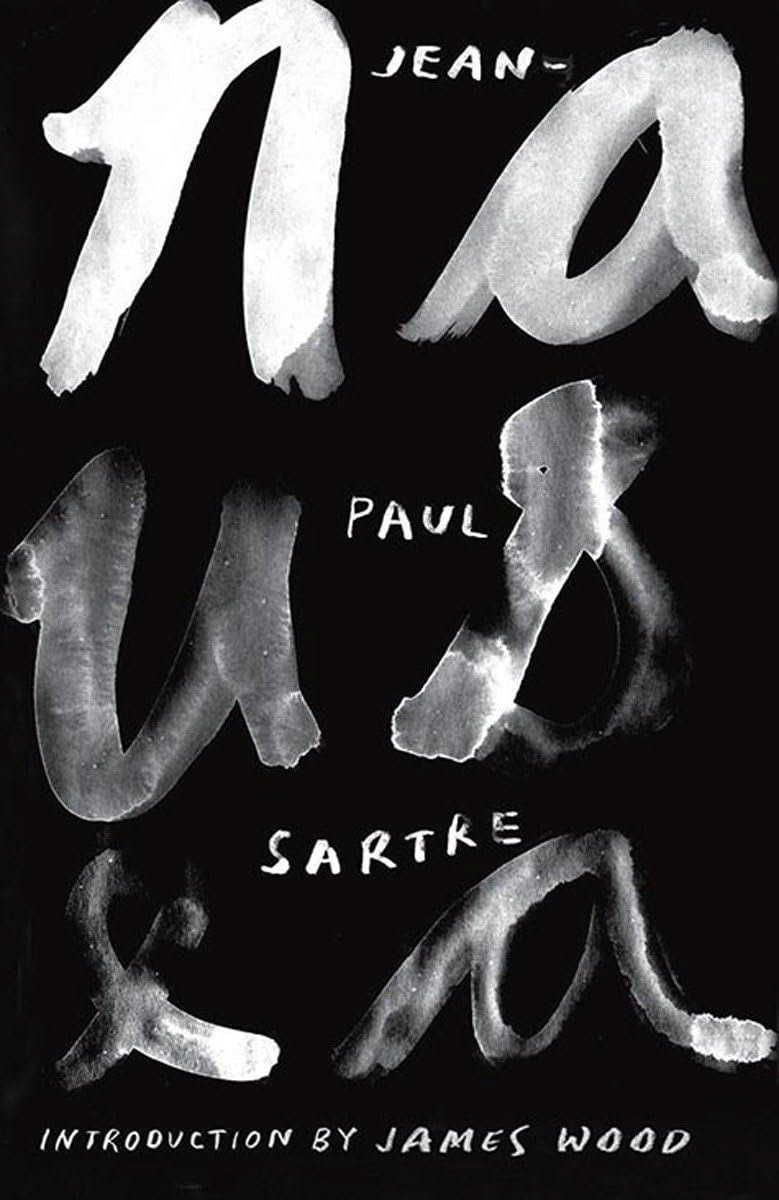
Book Review:
Nausea
by
Jean-Paul Sartre
Few novels unsettle the reader as profoundly as Nausea. First published in 1938, Jean-Paul Sartre's landmark work remains one of the defining texts of existentialist literature, not because it offers philosophical answers, but because it immerses readers in the uncomfortable experience of asking impossible questions.
The novel follows Antoine Roquentin, a solitary historian whose carefully ordered existence begins to dissolve under the weight of an overwhelming realization: the world simply exists, indifferent to human attempts to impose meaning upon it. What begins as vague discomfort gradually evolves into the "nausea" of the title not a physical illness so much as a profound awareness of existence stripped bare of comforting narratives.
That premise may sound abstract, but Sartre transforms philosophy into lived experience. Rather than presenting existentialism as an academic exercise, he invites readers to inhabit Roquentin's increasingly fractured perception. Everyday objects a tree root, a pebble, a café table become strangely alien, exposing the fragile assumptions that underpin ordinary life. It's an unsettling effect, and one that gives the novel its enduring power.
Sartre's prose is deliberately restrained, allowing Roquentin's observations to accumulate with quiet intensity. The novel moves slowly, often favoring reflection over action, and readers expecting a conventional plot may find themselves challenged. Yet that deliberate pacing serves a purpose. Nausea is less interested in external events than in charting the internal collapse of certainty, creating a reading experience that feels both intimate and intellectually demanding.
What distinguishes Nausea from many philosophical novels is its emotional honesty. Roquentin is not presented as a heroic thinker arriving at enlightenment but as an ordinary man struggling against isolation, purposelessness, and the limits of reason. His journey is often bleak, occasionally darkly humorous, and consistently human. Even readers who reject Sartre's conclusions may recognize the universal anxiety that drives them.
Nearly a century after its publication, Nausea continues to resonate in an era equally preoccupied with questions of identity, authenticity, and purpose. Its influence extends well beyond philosophy, shaping generations of writers, artists, filmmakers, and musicians drawn to its uncompromising examination of what it means to exist in a world without predetermined meaning.
Nausea is not an easy novel, nor does it aspire to be. It demands patience, introspection, and a willingness to sit with discomfort. Those who accept that invitation will discover a work whose questions remain as urgent today as they were in the years preceding the Second World War. Sartre's masterpiece endures not because it resolves life's uncertainties, but because it captures, with remarkable clarity, the unsettling freedom of living without guarantees.
Rating: 4.5/5
Review
by
Michael Benesh